Tuesday, February 26, 2013

"Fasting is not taking away, but adding something!" - Cathie

"Your light will break forth like the dawn"
I have been meditating on Lent these days. It's often associated with giving up something; this is called "a fast". Usually the effort lasts 40 days. People can give up: chocolate, meat or an activity they enjoy doing. I heard someone bring a challenge of giving up time on the Internet in order to think more about God.

Personally, I've been challenged by meditating on Isaiah 58. God speaks about the fast HE WANTS. "This is not the fast that I have chosen: Loose the bonds of wickedness, undo heavy burdens, share your bread with the hungry. Bring to your house the poor who are cast out. When you see the naked cover him. Do not hide yourself or forget your own flesh [family]. Then your light will break forth like the morning and your healing shall spring forth speedily."

Who doesn't want to have healing? Who doesn't want to be well? Healing in body, soul and spirit is associated with God's fast - caring for those in need.

The reason for fasting is often given to "draw near to God", or "to feel repentance for sins". God says that the reason for fasting is two-fold. First, withdrawing from our own comfort zone to help those in need releases spiritual energy - like the sun as it brings forth another day.

Secondly, our own health, about which we are concerned when we begin to fast, will result in healing as we come into harmony with God's purposes for the poor.

Colossians 1:11 We pray that you may be invigorated and strengthened with all power according to the might of his glory, to exercise every kind of endurance and patience [perseverance and forbearance] with joy. (Amplified)

"I Slept through the whole Mau Mau incident" - David

From Edith Devitt's book, "On the Edge of the Rift".

Many European (white) children were boarding at Rift Valley Academy with their dormitories in the original large building. To make it more secure from attack, the staff surrounded it with barbed wire and placed sharpened bamboo stakes in rows in from the entrance gate. They prepared a room for guards under the long, high, front veranda barricaded with sandbags. The Police stood guard in shifts around the clock. We knew their British commanding officer as "Chips". Parents were apprehensive about the safety of their children there in the heart of a Kikuyu danger zone [in Kenya]. It could not be denied that they and the expatriate mission staff on the station were possible targets for attack. Forest surrounded the place on three sides while the fourth side was the boundary of the reserve, Matathia, a center of dissidents who had been hindering mission work there for years, warning the Bible School students not to enter the area for meetings or visitation. A mission church, school and community flourished beyond in the adjacent areas of Mukeu and Lari.

One night an incident on the station caused near panic. We heard a shot near the African teacher's housing. Wells quickly dressed and ran downstairs tossing back to me directions as to what to do.

"Edith, co and bolt the door behind me." He was gone into the dark night.

We had little David Phillips, seven years old, with us for three months waiting for a place in the Academy dormitory. We gathered up David and our Helen and a couple of blankets, and got them all through the small, low door leading to a narrow passage under the eaves. One of the girls helped me by carrying David who didn't waken through the whole episode.

I barricaded the small door with furniture, hiding it from view, then stepped into Helen's bedroom just on the other side of the wall from where they were. I stood in shock, my heart pounding from fear, feeling completely helpless.

(Nothing untoward happened that night. It was one of many experiences during the Mau Mau years in Kenya, from 1952 - 1957. God protected us all during those years, and all these experiences taught me the lesson of depending upon the Lord for his presence, in all situations. Edith Devitt's book tells of the amazing spread of the Christian Gospel in Central Kenya from 1931-1963.)

Monday, February 25, 2013

Commemoration of Polycarp's Day of Martyrdom

(February 24th is the day Christians remember the death of Polycarp, in Smyrna (Izmir, Turkey) in the year 154. This martyrdom, together with that of 11 other believers from Philadelphia, takes place at the beginning of one of my novels.)

Now, as Polycarp was entering into the stadium, there came to him a voice from heaven, saying, “Be strong, and show thyself a man, O Polycarp!” No one saw who it was that spoke to him; but those of our brethren who were present heard the voice. A

And as he was brought forward, the tumult became great when they heard that Polycarp was taken. And when he came near, the proconsul asked him whether he was Polycarp.

On his confessing that he was, [the proconsul] sought to persuade him to deny [Christ], saying, “Have respect to thy old age,” and other similar things, according to their custom, [such as], “Swear by the fortune of Cæsar; repent, and say, Away with the Atheists.”

But Polycarp, gazing with a stern countenance on all the multitude of the wicked heathen then in the stadium, and waving his hand towards them, while with groans he looked up to heaven, said, “Away with the Atheists.” 

Then, the proconsul urging him, and saying, “Swear, and I will set thee at liberty, reproach Christ;”

Polycarp declared, “Eighty and six years have I served Him, and He never did me any injury: how then can I blaspheme my King and my Saviour?”

Saturday, February 9, 2013

"Art - Into The Depths of God" - Calvin Miller

"Deep" is not a place we visit in our search of God, it's what happens to us when we find him.

Should we not all be flexible before we know God's will? Should we not all be immovable after we understand what he wants done? My suspicion is that only those who can bless the furnace ever understand the gold.

Our call puts a holy centreredness in our living. When the light shines in the darkness, does the darkness merely leave or is it changed to light?

We must break the habit of treasuring our treasures and develop the habit of treasuring the abundance of God's grace.

It's amazing that we take our individual schedules so seriously that we never wonder if God has anything else for us to do.

Why should we stop and consider art at all?

For two reasons. First, art locates us in the human condition. Second, art is the way in which artists-and Christians -define themselves.

The most popular form of art among evangelicals may be the story.

Eugene Peterson -we tell stories to locate ourselves in the human condition.

Stories like rolling snowballs, grow with telling. We must allow the power of our stories to widen rather than narrow our province. The story of Christ and the telling of it is the central art of Christianity . Ia is art universal. It is the art that drives the entire mission enterprise.

The problem is that God almost always asks of us tasks that scare us to death.

Are Christians willing to make God beautiful and to let their creative impulses become the art that defines them? Perhaps the art form at which we need to become adept is the telling of the gospel story. Our story is most crucial when it touches heaven with its desire to define God.

What artist has not known the visceral amputation that art demands? Art and faith both know this agony. What servant of Christ does not hunger to give The Lord more and more of the inner life?

"Can Islamic Countries Have Economic Cooperation?"

Meral Tamer is a columnist for daily Milliyet. He wrote this provocative, disturbing article for Turkish readers on February 9, 2013.

These figures reveal clearly the major conflicts and the major gaps between Islamic countries:

1) Islamic countries produce 65 percent of the oil, 51 percent of the natural gas, 70 percent of the natural rubber, 52 percent of the tin, 33 percent of coconut and 39 percent of the spices of the world.

2) Despite this, 22 of the 48 countries categorized as “the least developed countries” are in the Islamic world, as are 22 of the 40 categorized as “heavily indebted poor countries,” as are 33 of the 70 countries in the world categorized as “low-income, suffering from food shortages.”

3) During the period between 2007 and 2011, the Gross Domestic Product (GDP) per capita increased from $4,725 to $5,500 in the Islamic countries. In five years there was an increase of 20 percent.

4) However, the richest Islamic country is 220 times wealthier than the poorest. Qatar is the richest with a GDP of $53,000, while Ethiopia is the poorest with a GDP of $177.

At Davos in the World Economic Forum this year, I attended many sessions covering the Islamic world, and it made me hurt badly inside, particularly the pathetic economic situations of countries such as Egypt and Tunisia that triggered the Arab Spring. Unemployment is hitting a record high among the youth, while the aid coming from rich neighboring countries is unable to reach its destination and is being pocketed on the way.

For this reason, I especially focused on the 15th executive board meeting of the Islamic Chamber of Commerce, Industry and Agriculture held in Istanbul. Hosting the meeting, the President of the Union of Chambers and Commodity Exchanges of Turkey (TOBB) Rifat Hisarcıklıoğlu, the keynote speaker Customs and Trade Minister Hayati Yazıcı, and the President of the Islamic Chamber of Commerce and Industry Sheikh Saleh Kamel all agree on this: “The global crisis has changed power equilibriums in the world. Those countries known to be powerful yesterday are today far from their former power. The center of production is shifting from the West to the East. As Islamic countries, it is possible for us to increase our significance in the global system. There is a window of opportunity ahead of us and we should take action immediately.”

Yes, truly, a move has to be made as soon as possible, but how will this be made? Islamic countries - in which 1.6 billion people live - only provide 8.2 percent of world’s production, even though they constitute 22 percent of the world’s population.

And, when it comes to us, Turks? Also, with the contribution of the crisis in the West, Turkey has rapidly increased its exports to Arab countries recently. Total exports to Iraq in 2012 surpassed Germany, which had been the number one country for years. Some 36 percent of last year’s exports - $55.3 billion - went to Islamic countries. However, the share of the Islamic world in our imports has been just 13 percent ($31.7 billion). When these two figures are combined, it corresponds to a share of 23 percent of our foreign trade.

Turkey has long been seeking the position of being a “locomotive” for Islamic countries. However, as far as I saw in Davos, especially among the Arab world, solidarity and cooperation are very difficult for now.

Meral Tamer is a columnist for daily Milliyet in which this piece was published on Feb. 8. It was translated into English by the Daily News staff.

"Why Israel Succeeds and Cyprus Fails"

By Theodore Panayotou Published on February 3, 2013

A study in two small nations in the Eastern Mediterranean is instructive. Why does Israel keep on succeeding in so many ways?

"Technological and business innovation is the ultimate source of productivity growth and competitiveness. Israel has a fraction of the resources per capita we have and fewer than almost any other country in the world and yet it has managed to become the start-up nation of the world. It thrives in the midst of economic crisis, while we wander about aimlessly unable to even pay people’s wages.
Israel with its technological sophistication and business acumen has managed not only to survive in an area surrounded by enemies that threatened its very existence, but also to become the envy of even the developed countries of Europe and America.

In per capita terms, Israel has more start-ups than any other country in the world and attracts 30 times more venture capital than the whole of Europe, in addition to the number of companies it has listed on the NASDAQ stock exchange, the second largest in the world.The Israelis attribute their tremendous technological, business and economic success to the lack of natural resources and to the outside threat.

Cyprus is facing similar threats to its national survival but we do not see similar dedication and effort to raise our international competitiveness through research, innovation and entrepreneurship. Now that we both have discovered natural gas, we celebrate madly, while the Israelis are worried that the discovery might undermine what they have achieved through hard work, research, innovation and entrepreneurship.

They fear that it may lead them to new adventures. Could it kill the incentive for continued progress and distort the economy? Could it bring easy riches, complacency and corruption as happened with their Arab neighbours.

They are debating ways to handle this double-edged sword in order to make it more of a blessing than a curse. They are not prepared to sacrifice even 10 per cent of their research, technology, innovation and entrepreneurship at the altar of the natural gas. If anything, they plan to invest much of their gas revenues in redoubling their research and technological innovation efforts.

Thus, in Israel necessity and adversity gave birth to creativity and entrepreneurial culture, but not so in Cyprus, despite the proximity and similarities of the two countries. Why did Israel do it while we did not?

The reasons are many but almost all have to do with the different mentality and culture which has developed in the two nations since gaining their statehood, basically the past half century.

In Israel, an insatiable questioning of authority and an anti-hierarchical ethos dominates political and economic life. In Cyprus the 'deification' of power and hierarchy dominates all aspects of life. In Israel, a man is defined by what he can do and how well he does it. In Cyprus a man is defined by title or position, and based on who you know rather than what you know.

In Israel, the teacher acquires appreciation for the student and the manager for the employee. In Cyprus, it’s the opposite: the student owes respect and allegiance to the teacher, the employee to the manager, and the soldier to the officer regardless of ability, competence and performance.
The Israelis from infancy are trained to challenge the obvious, to ask questions, and to debate and criticise everything, to think creatively and to innovate.

In Cyprus, children are trained to accept what the grownups (parents and teachers) say and not to question it. When I teach in Israel 80 per cent of the students ask questions; they challenge everything, I say. In Cyprus, if you're lucky 20 per cent rarely asks questions and hardly anyone challenges the teacher. Our centralised education system is investing in routine, extrinsic incentives, standardisation and conformity, while in Israel it promotes diversity, intrinsic motivation and spontaneous creativity and imagination, just those skills required by the connected and globalized international economy.
In Israel, if you're the manager, your authority will be constantly challenged: why should you be the manager of me and not me the manager of you? Therefore, you must constantly prove by your decisions and actions that you deserve the position you hold. Even army officers are challenged by their soldiers. Blind obedience is not required; actually it is frowned upon.

In Cyprus the opposite happens. Many of the officers in the security forces, and the managers of the wider public sector and even the private sector, have obtained their position by political favor and connection or based on the number of years of service and not through their own merit.
It is then not surprising that they impose their authority by discipline rather than earn it with their performance. Their subordinates know that the only way to climb the ladder is to follow their example, buttering up their superiors and investing in personal and party connections and not in performance and creativity.

In contrast to the usual practice in Cyprus, in Israel subordinates do not run to their superiors to solve problems, but they assume the risk and the responsibility to invent imaginative solutions in real time and on the go. Textbook answers are discouraged and imaginative solutions are sought. Thus, most innovations are bottom-up, not top-down.

In Israel, military service has become an incubator of innovative companies (startups). Those who haven’t served in the army have a hard time finding work in government and business because they are considered to be "problematic" and immature, having lost the opportunity of technological training and operational experience offered by military service. In Cyprus, military service is considered a necessary evil and a waste of time since neither technological training nor professional development of soldiers takes place, while exemption from service can be achieved with the right connections.
Another important factor in creating innovative enterprises in Israel is the willingness to take risks and an accepting attitude towards failure which entices failed entrepreneurs to use their experience and try again instead of stigmatising and marginalising them. Without tolerating a large number of failures it is impossible to achieve real innovation.

But the failures should be "smart failures". We must distinguish between a well-planned experiment and Russian roulette. Risks undertaken intelligently and not recklessly result in useful lessons even if the enterprise fails.

Studies have shown that entrepreneurs who failed in their previous company are twice as likely to succeed the next time around compared to those who are starting their first business, and almost the same chance with those who succeeded the first time. Whether they succeed or fail, entrepreneurs make their contribution to the economy. If they succeed, they create new valuable products and services; if they fail, they keep the established entrepreneurs under constant pressure to innovate.
Unfortunately, in Cyprus failure is stigmatised and the unsuccessful businessman is marginalised. The bankruptcy law is unforgiving and works proactively as a deterrent against any attempt at innovation and entrepreneurship. When profit from success is demonised and failure stigmatised, it is not surprising that high-risk, high-return innovative entrepreneurship is rare in Cyprus while in Israel it is commonplace and produces miracles." Published in Cyprus News, February 3

Dr Theodore Panayotou is Professor and Director of the Cyprus International Institute of Management (CIIM). He served as Professor of Economics and the Environment at Harvard University and consultant to the UN and to governments in the US, China, Russia, Brazil, Mexico and Cyprus. He has published and was recognised for his contribution to the Intergovernmental Committee on Climate Change, which won the Nobel Peace Prize in 2007

Tuesday, January 29, 2013

"Prayers from Jerusalem for Syria"

FROM BISHOP IN JERUSALEM THE RT REVD SUHEIL DAWANI

The latest news coming out of Syria and the refugee camps is so deeply appalling and tragic.
I pray daily for all those in the midst of pain and terror, especially the women and children.

The Damascus Gate in Jerusalem
The UN has reported that 2.5 million people have fled their homes. Many are women and children who are fleeing in fear from the ongoing sexual violence against them. The International Rescue Committee reports that those who finally make it into the refugee camps are also victimized. As refugees, women and girls (and boys) remain vulnerable to multiple forms of gender-based violence, and unfortunately few cases are reported due to the feeling of shame or fear of retribution.
This crisis requires urgent action.

Syria is rich with history and culture and has a key role in our own Christian heritage – St Paul was converted on the road to Damascus and today Syria is the home to approximately 2 million Christians – it is the largest Christian community in the Middle East outside Egypt.

As Christians, not only in the Middle East, but worldwide, we are called to respond to this crisis. Jesus is our example of how we are to live and Our Lord has specifically told us to ‘look after orphans and widows in their distress’ (James 1:27b) and we are to treat each other with respect and kindness –‘love your neighbour’ (Mark 12:31).

We, as Christians, must work to be the bridge of reconciliation that can bring peace, with justice, to the Middle East. In this land, that all the Abrahamic faiths hold Holy, we co-exist, living side by side; however, we cannot be a silent witness to the brutal treatment of women and children. The ravages of war will leave, are leaving, deep scars that will take generations to heal.

It is vitally important that we work to change the archaic attitudes that dominate this region of the world. Generations of women know nothing more than continued suffering.

Here in the Diocese of Jerusalem we are working to empower women and youth. In our institutions, our schools, and training centres, we provide an environment where boys and girls are equally valued and are equally encouraged to participate in learning and activities that foster positive and respectful relationships irrespective of gender, ability and ethnicity.

Through the empowering work of the Women’s Ministry in the Diocese of Jerusalem, we are implementing important, and necessary, awareness initiatives, such as White Ribbon Day and participating in the ‘16 Days of Activism for the Elimination o f Violence against Women’. Our Women’s Ministry promotes women leadership by having excellent female role models from our local community, speak at our workshops. We are working diligently to raise awareness, change attitudes, and behaviours that lead to violence.

I have the deepest concern for all people, women and children, who are in Syria, and in the refugee camps in foreign lands. My prayers are ongoing for peace, with justice and reconciliation, that we can live in a world of non-violence, that we can hold our women and children as treasures and treat them with the respect and dignity that all human beings deserve.

May God be with us all.
+Suheil
The Rt Revd Suheil Dawani
Bishop in Jerusalem

Monday, January 28, 2013

Can prayer change church planting in Toronto?

Prayer brings breakthrough. In 2 Samuel 5:20, David defeated them there. And he said, "The Lord has burst through my enemies before me like a bursting flood."
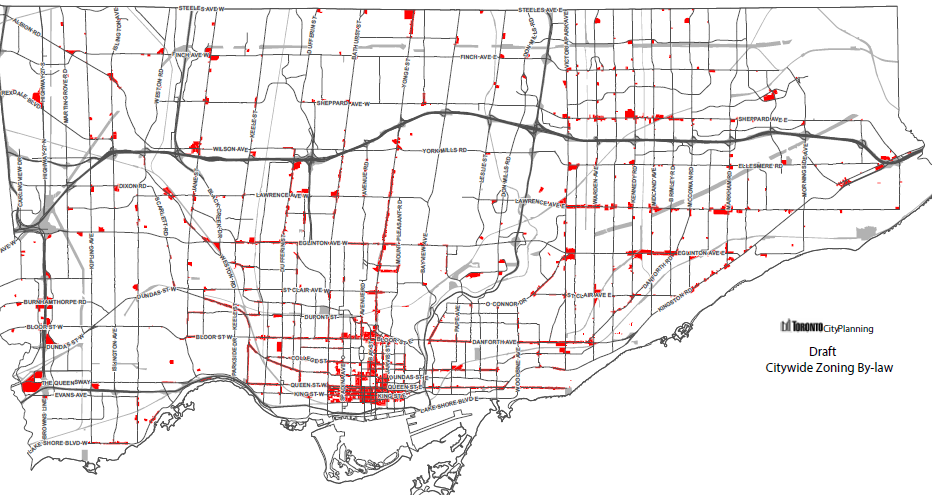
In August, 2012 church planters discovered that the City of Toronto had presented a new by-law that is effectively removing all zoning for new churches, only allowing permits in very expensive commercial zones, in less than 2% of the city.  They called people to pray and God has heard the prayers.
Yesterday the City Planning Department issued a notice with a new draft zoning proposal allowing places of worship in over 80% of the city, including most residential and commercial zones plus office-industrial areas, from 2% to 80%, Praise God.

Note: this information came from Rev. McVetty and others who have made presentations to the Toronto City Council.

Saturday, January 26, 2013

HUGE: Turkey considers Shanghai organization an alternative to EU


 Imagine Turkey joined with China -  Photo: Courtesy Wikimedia
(Note: Hardly a single person I've talked with knows what SCO is. It is one of the world's most important organizations. Members of the Shanghai Cooperation Organization include China, Russia and most of the former Soviet Union countries. Observer statusnations include India, Pakistan and other nations in Asia. At its meetings representatives from half of humanity sit together for consultations on military, economic, business development issues. SCO combines the might of EU and NATO - for Asia. This news, for anyone who cares to think about the future of the Middle East, is HUGE. Think of what it means if Turkey joins up with China and Russia, and leaves the EU behind.
 
"Turkey and the European Union have failed to make substantial progress in their accession talks, pushing Turkish Prime Minister Recep Tayyip Erdoğan to once again say that Turkey is seriously considering seeking membership in the Shanghai Cooperation Organization (SCO) as an alternative at a time when the EU’s future looks increasingly dim.
"Speaking to reporters during a televised program aired in Kanal 24 late on Friday, Erdoğan said Turkey is now seeking alternative options amid eroding hopes on the EU process with regard to adamant opposition to Turkey’s membership by a number of EU member countries.
Touching upon a wide array of issues, Erdoğan said Turkey is seriously considering being part of the SCO.

"Turkey was accepted as a dialogue partner by the SCO at its annual summit in Beijing on June 7.
“The fact is that we have not yet given up on the EU process. Egemen Bağış makes his presentation on [Turkey-EU] relations at every Cabinet meeting. He regularly travels throughout Europe,” Erdoğan said, citing the government’s continuing interest in the EU despite the pessimistic atmosphere."

Quoted from Turkish Newspaper "Zaman", Saturday, January 26, 2013

Wednesday, January 23, 2013

"Out Of The Cold" - David

Last night it felt like - 31 below (Celcius)
Freezing temperatures across much of Canada and USA make most people happy to be indoors.

There is one group of people for whom this is a terrible season. The homeless. In our city hundreds of home
less people need a place to stay on these frigid nights.

For 18 years our church in Toronto has been part of the Out Of The Cold movement. Starting in November and lasting until April, our church hosts 60 persons each Wednesday night. Volunteers serve a hot meal at 7:00 pm and a hot breakfast at 7:00 am. Our guests sleep in the gymnasium on mattresses and an atmosphere of safety is provided by a team that stays all night long. In our church the volunteers are split up into four teams so that we come in to serve the homeless once a month.

The next night, on Thursday, another church is open to this group and so, during a week, these 60 men (mostly) and women find a place to stay out of the cold.

In our kitchen a simple sign is posted that says it all: "In the face of each guest we see the face of Christ, the one we serve." I am deeply moved by this as I spend the night shift, mostly talking with those who find sleeping difficult.

Some ask, "Why don't they just get a job?, or "Why are they homeless?"

I believe that much of this homelessness is the result of mental imbalance, some of it going back into the childhood of our guests. I've had long conversations, sometimes as long as five hours, with people. There's no time to read during the night shift - people want to talk. Mental illness that is not associated with violence is troubling indeed. Perhaps 80% of our our guests carry their scars due to mental illness. There is no easy solution here, no, "What's your plan to get out of this predicament?"

And, another group, perhaps 20%, are here because their jobs have disappeared. This is especially the case in Northern Ontario. Men come from the small cities where they had jobs in the forestry, mining or pulp-and-paper businesses. As these left Ontario's north land, men drift to the city. They have difficulty in finding a job...and find something they didn't want: homelessness.

Talking with a homeless man...(or several at one time)..."is receiving the guest Christ sent to us."